Two Films, the Same Dirty Job
“There’s a new flush of ducks in Piss Creek. In another month, something will have lasted a year.” From Backwardness by Garielle Lutz
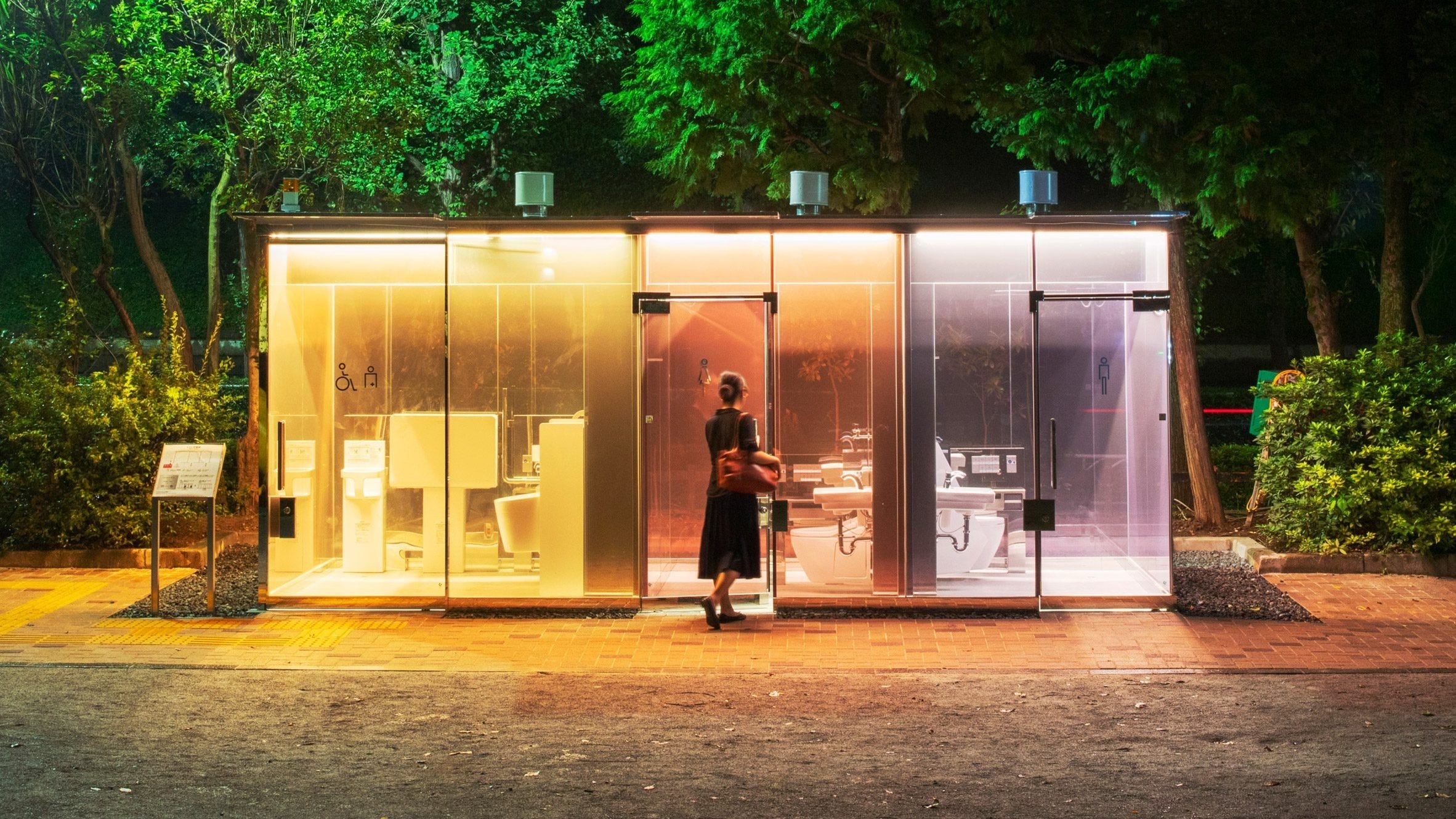
Perfect Days (2023) would have not worked as well as it did if not for the elegant lavatory architecture of Tokyo. (In fact, a design magazine has published an article advising travelers to the city about where to find the toilets featured in the film.) The main character, Hirakawa, a janitor, (played by Kōji Yakusho) can be convincingly avuncular, can be a credibly stern yet kindhearted coworker, so long as feces and urine, the raw materials of his profession, remain reported, implied, not in frame. Hirakawa blends rather well with the elegance of the Shibuya district. The snobs that turn up their noses at him seem like they could do that to anyone; they do so to their own children. The janitor is no different. He belongs there.
It’s much more difficult to imagine such a film in America. We don’t really believe in a humble yet dignified life, one filled with a quiet inner beauty, at least not for janitors. Our filthy public toilets reflect the general sentiment of the public. Wim Wenders would be hard put romanticizing the lavatory culture of New York, let alone Scranton or Wilmington. Imagine snapping a photo of dappled sunlight as it glances off bathroom tile, only to have Joe Biden step into frame, the taut scalp between his hair plugs glistening. (The 46th President is said to visit Philadelphia often.)
Cleaning toilets is also the fate of the family patriarch in Tokyo Sonata (2008). Though it factors less in the overall plot, director Kiyoshi Kurosawa doesn’t spare us the usual filth of such places. Laid off from his job, salaryman Ryūhei Sasaki (played by Teruyuki Kagawa), has to make ends meet as a janitor at a mall, where he—along with the viewer—has to stare down human waste in way that Wim Wenders gently avoids. Though it doesn’t seem so at first, Tokyo Sonata ends up being a kind of spiritual prologue to Perfect Days, as Sasaki finally learns to apply himself to a more humble métier The penultimate scene, where Saski scrubs an escalator, hints that he has also found virtuosity along with his piano playing son.
Suburban Bus Ride
The weather had turned warm, outright damp, during the film screening of Perfect Days at the Woodmere Art Museum. The sun had gone down well before the film had started, and so, when we emerged onto the wide drive that fronted the museum, it felt as if it were deep night, if not early morning, though the buses were still running. We had tried to economize getting there, to this suburban art museum, located in the wooded, gently rolling hills just within the Philadelphia city limits, but missed our transfer, a mere signpost, unsheltered, along a turnpike, and had to hail a car from a mall parking lot further down the road. Our driver, a black woman, listened to an audio book about the history of slave rebellions in the Antebellum South.
As we listened to an account of the enslaved being whipped to death by vindictive planters, it occurred to me that a few of the buildings in the vicinity, a roadside inn turned local eatery for instance, had been built before the abolition of slavery in the Commonwealth of Pennsylvania, which, being enacted in 1780, was the first legislation of its kind in the United States, yet another credit to the Quaker influence on state politics, but I wondered what the Quakers thought of slave rebellions in their own country. As it turned out, they were conflicted, prefiguring the habitual position of American liberalism for the next few centuries. Most objected to the practice of slavery but objection was overridden by a commitment to nonviolence.
The film screening was free, open to museum members and nonmembers alike, but, having hailed a car going there (the particular service we used not being important) we decided to chance it on the bus again. It came and, what’s more, came at the specified time, a minor miracle for SEPTA, our regional transit authority, though they have gotten much better at promptness and consistency during the past year, budget woes notwithstanding. There were only a few others aboard, two or three maximum, coming from the service jobs in the wealthy suburbs, going back to their homes in less wealthier suburbs. We made our transfer this time. The wheel of American commerce was still spinning, if at a more relaxed pace.